Transforming education through research, innovation, and strategic partnerships. GERC is committed to advancing excellence across institutions, faculty, and students worldwide.
20+
Years of Excellence
1000+
Students Impacted
Affiliated to NITI Aayog, Govt of India
ISO 9001:2015 Certified
200+ Expert Professionals
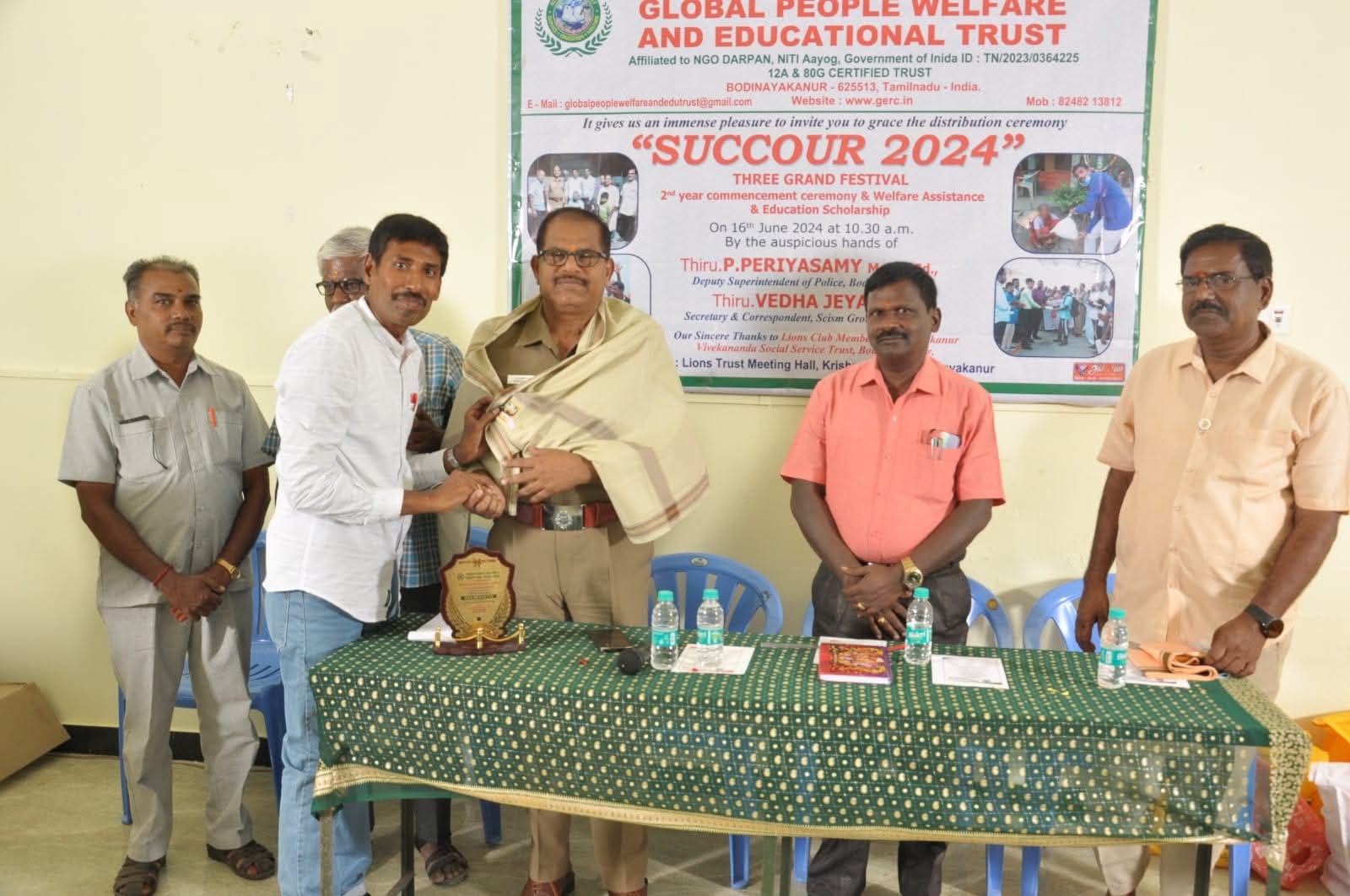
Global Educational Research Council (GERC) is run by Global People Welfare and Educational Trust, an ISO 9001:2015 certified organization. We are dedicated to advancing education and research, empowering institutions and individuals to achieve excellence.
Affiliated to NGO DARPAN, NITI Aayog, Govt. of India
12A & 80G Certified Trust
ISO 9001:2015 Certified Organization
200+ expert professionals
20+
Years Experienced Facultys
1000+
Benefited Students
100+
Rewarded with Cash and Medals
98%
Success Rate
Our Services
Comprehensive solutions for educational and research excellence
Academic Research Support
Academic research support can mean a few different things. Here are the main ways I can support you—tell me which ones you need...
Choosing a research topic (school-level or higher, maths/science/general)
Framing research questions or objectives
Literature review help (summaries, key ideas, how to organize it)
Research methodology (qualitative/quantitative, surveys, experiments, sampling)
Data analysis guidance (concepts, steps, interpretation — no unsafe content)
Academic writing (abstract, introduction, methodology, discussion, conclusion)
Editing & improving clarity (grammar, structure, academic tone)
Referencing & citations (APA, MLA, Chicago – how to do them correctly)
Plagiarism-safe paraphrasing and summarizing
Presentation or viva preparation.
Faculty Development
Faculty Development refers to the continuous process of improving teachers' knowledge, skills, attitudes, and professional competence...
What it focuses on
Teaching skills: lesson planning, classroom management, assessment methods
Subject knowledge: staying updated with new content and research
Use of technology: smart classrooms, LMS, online tools
Professional growth: communication, leadership, mentoring
Research & innovation: publications, projects, new teaching strategies
Common faculty development activities
Workshops & seminars
Refresher courses / orientation programs
Webinars & online courses
Peer observation and mentoring
Research training programs
Conferences and academic collaborations
Why it’s important
Improves quality of education
Helps teachers adapt to new curricula and technologies
Increases student engagement and learning outcomes
Builds confidence and leadership among faculty
Supports institutional growth and accreditation
Outcomes
Better teaching–learning process
Updated and motivated faculty
Strong academic culture
Improved student performance
Institutional Accreditation
Institutional accreditation is the process by which an entire educational institution is formally evaluated and recognized as meeting established quality standard....
Has qualified faculty 👩🏫
Follows an approved curriculum 📚
Maintains academic and ethical standards
Has proper infrastructure, governance, and student support
Continuously works to improve quality
If approved, the institution is declared accredited by a recognized accrediting body.
---
Why it’s important
Accreditation helps ensure that:
🎓 Your degree is recognized and valued
💼 Employers trust the institution
🌍 Credits can be transferred or used for higher studies
🏛️ The institution is eligible for government grants/schemes
📈 Quality of education is monitored and improved
---
Institutional vs Program accreditation
Institutional accreditation → evaluates the entire college/university
Program accreditation → evaluates specific courses (e.g., Engineering, MBA, Medicine)
Both are important, but institutional accreditation is the foundation.
---
In India (very important 🇮🇳)
Some key bodies are:
NAAC (National Assessment and Accreditation Council) → accredits institutions
UGC → recognizes universities
NBA → mainly program accreditation (technical/professional courses)
Example:
A college with NAAC A+ grade is considered high quality.
---
Accreditation grades (example: NAAC)
A++ / A+ → Excellent
B++ / B+ → Good
C → Minimum standards met
Not accredited → Quality not verified
International Collaboration
International collaboration means people or institutions from different countries working together toward a shared goal...
What international collaboration involves
Joint research projects (shared data, experiments, or fieldwork)
Co-authored publications with researchers from multiple countries
Student & faculty exchanges
Shared funding or grants (often from international agencies)
Conferences, workshops, and networks across borders
Why it matters
🌍 Diverse perspectives → better ideas and stronger results
🧠 Access to expertise & facilities not available locally
📈 Higher research impact (international papers are often cited more)
🤝 Solving global problems (climate change, health, AI, sustainability)
Common fields where it’s strong
Science & technology
Medicine and public health
Climate and environmental studies
Social sciences and economics
Space, AI, and energy research
Challenges to be aware of
Time zone and communication barriers
Funding and legal differences
Data sharing & ethical regulations
Cultural and language differences
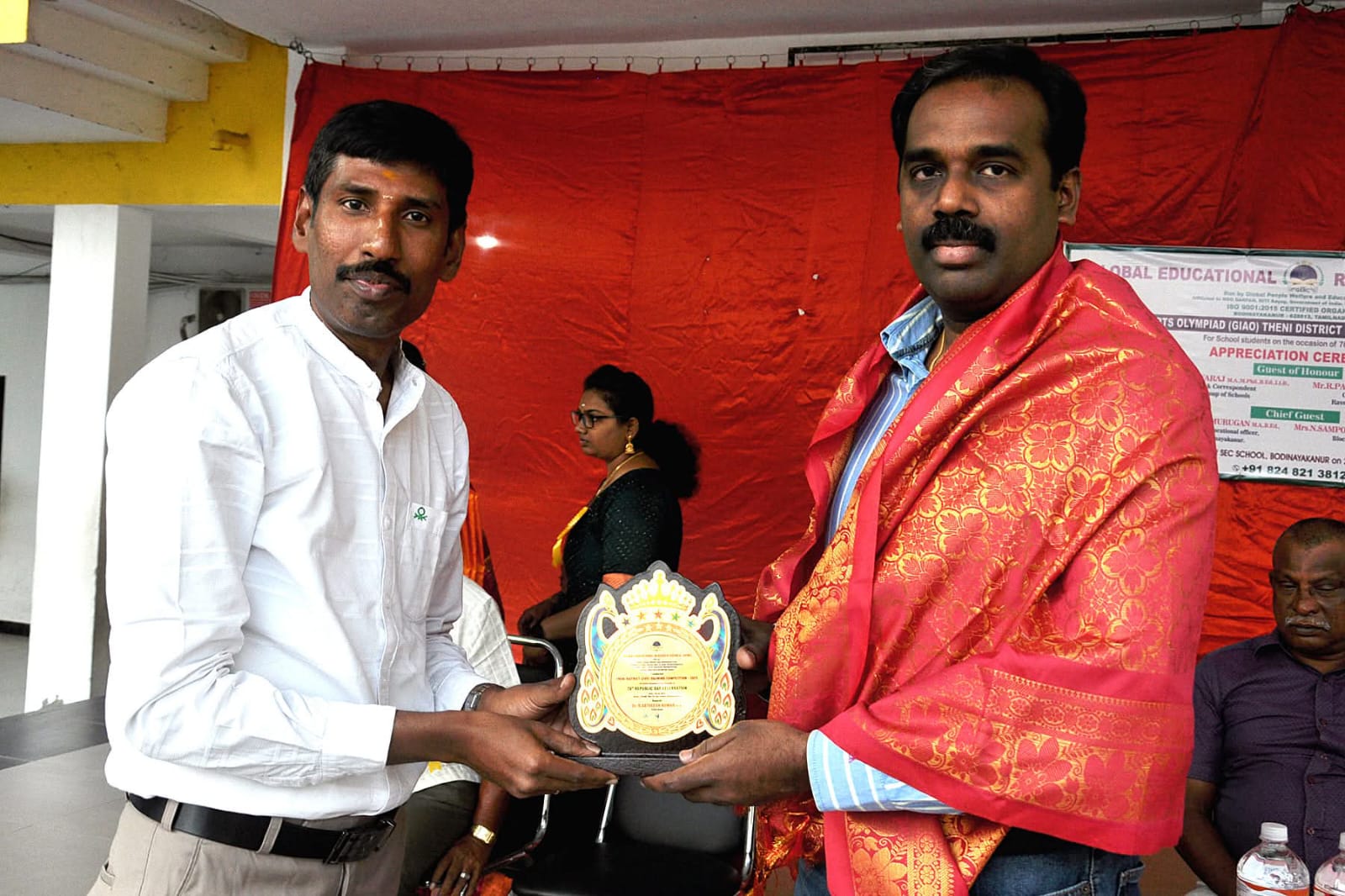
Awards & Recognition
Honoring excellence in education, research, and innovation.
Innovation & Startups
🚀 Innovation & Startups: Step-by-Step Plan
Phase 1: Problem Discovery (0–1 month)
Goal: Find a real problem worth solving
Observe problems in education, healthcare, agriculture, climate, fintech, AI, or daily life
Talk to users (friends, teachers, professionals, small businesses)
Write problems as: “Users struggle with ___ because ___.”
Shortlist 1–2 strong problems
📌 Output: Clear problem statement + target users Phase 2: Idea & Innovation Design (1–2 months)
Goal: Create a unique, useful solution
Brainstorm multiple solutions (don’t settle too fast)
Check: Is it new or significantly better? Is it simple and scalable?
Define: Value proposition (why people will care), Innovation type: product / process / service / tech
Do basic market & competitor analysis
📌 Output: One validated startup idea Phase 3: Skill & Team Building (Parallel)
Goal: Build the right foundation
Learn essentials: Design thinking, Basics of business model, Pitching & communication
Build a small team: Tech / Design, Business / Operations
Join: Innovation cells, Incubation clubs, Hackathons & startup events
📌 Output: Core team + basic startup skills Phase 4: Prototype & MVP (2–3 months)
Goal: Build something testable
Create: Prototype (paper / digital / basic model), MVP (minimum working version)
Get user feedback early, Improve based on real usage
📌 Output: Working MVP + user feedback Phase 5: Validation & Business Model (1–2 months)
Goal: Prove people want it
Decide: Who pays? How much? How you deliver?
Test pricing and adoption
Track: User interest, Retention, Willingness to pay
📌 Output: Validated business model Phase 6: Funding & Support
Goal: Get resources to grow
Apply to: Incubators / accelerators, Innovation grants, Government startup schemes
Prepare: Pitch deck, One-page startup summary
Network with: Mentors, Founders, Investors
📌 Output: Funding or incubation support Phase 7: Scaling & Recognition
Goal: Grow and get visibility
Improve product quality, Expand user base
Apply for: Startup competitions, Innovation awards, Demo days
Protect IP (if needed): patents / trademarks
📌 Output: Growth + awards + credibility 🧠 Extra Tips (Very Important)
Fail fast, learn faster
Don’t wait for a “perfect” idea
Innovation = problem + impact, not just technology
Document everything (great for CVs, grants, and future funding).
GERC Membership
Join GERC and become part of a global community dedicated to advancing education and research. We offer comprehensive membership programs for faculty, researchers, and students.
Why Join GERC?
Access to global research network and collaboration opportunities
Annual awards and recognition for outstanding research and teaching
Participation in international conferences and seminars
Access to exclusive training programs and workshops
Mentorship and career guidance from industry experts
Discounts on publications and research materials
Membership Categories
Professional Wing
For faculty members, researchers, and professionals in education and academia.
Annual Membership: ₹5,000
or
Life Membership: ₹25,000
Benefits Include:
Certificate of Membership
Membership ID and Badge
Access to research publications
Priority for conference presentations
Eligibility for awards and grants
Networking with global experts
Students Wing
For undergraduate and postgraduate students passionate about research and innovation.
Annual Membership: ₹2,000
or
Life Membership: ₹10,000
Benefits Include:
Student Membership Certificate
Research project support
Mentorship programs
Internship opportunities
Student awards and scholarships
Career guidance and placement support
Institutional
For colleges, schools, and educational institutions seeking to partner with GERC.
Annual Membership: ₹15,000
or
Life Membership: ₹75,000
Benefits Include:
Institutional Logo Display
Custom training programs
Joint research opportunities
Faculty development workshops
Accreditation support
Access to all GERC resources
Ready to Join?
Take the first step towards professional growth and global recognition. Our membership process is simple and transparent.
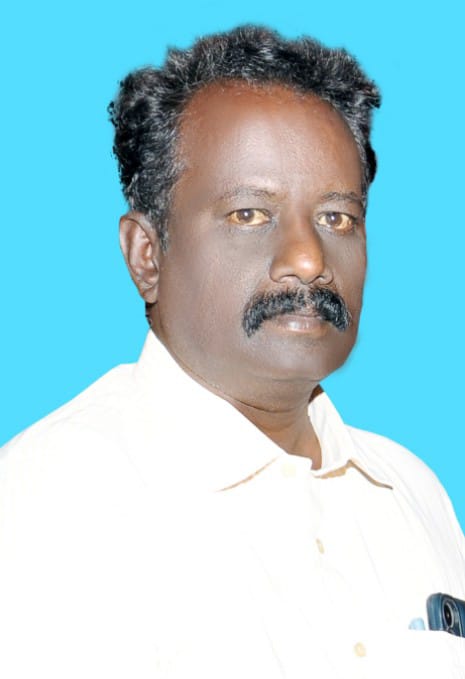
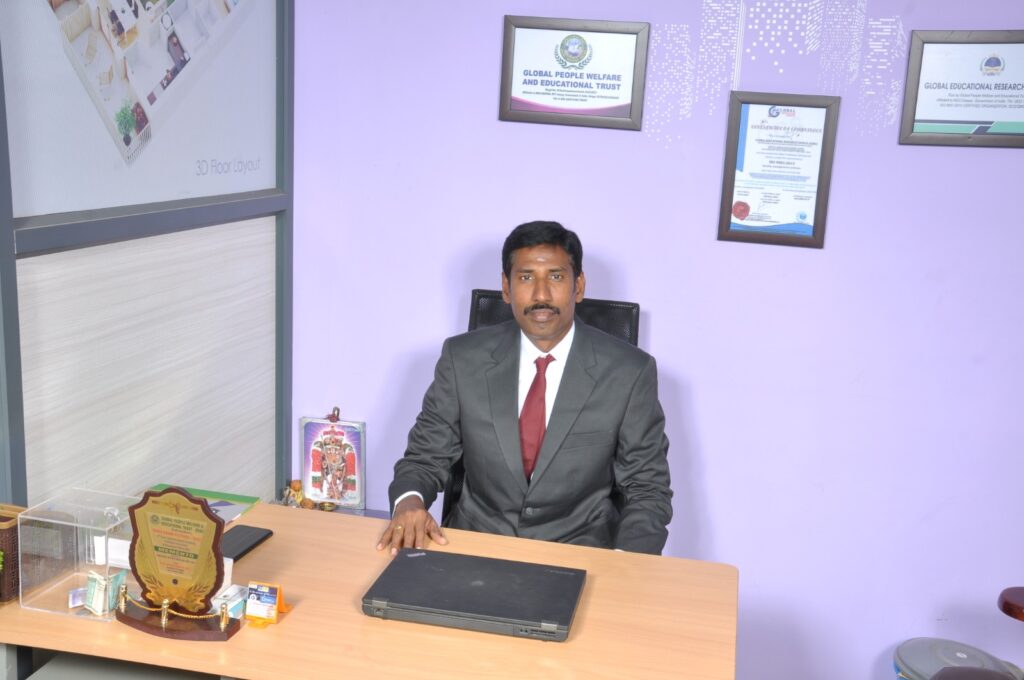
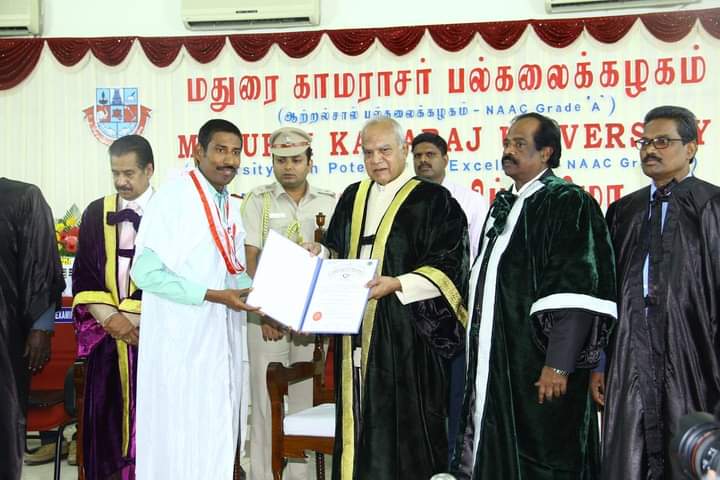
Dr. R. SATHEESHKUMAR Ph.D is a Researcher, Educator, Social activist and the Chairman of GERC. He holds a Ph.D in MATHEMATICS from the Madurai Kamaraj University Madurai, Tamilnadu, India (2018). His research topic is Modeling and Analysis of Stochastic Inventory System in Multi-Echelon with Retrial Demand. He has published his work in several academic journals such as International Journal of Mathematical Sciences, IOSR Journal of Mathematics etc.
Teaching Areas
Stochastic Process
Inventory
Operation Research
Supply Chain Management
Partial Backlogging Inventory System
Research Areas
Two Echelon Inventory System
Retrial Demand
Perishable Inventory System
Direct Demand
Education
Ph.D in Mathematics, Madurai Kamaraj University, Madurai, Tamil Nadu, India. Research topic: “Modeling and Analysis of Stochastic Inventory System in Multi-Echelon with Retrial Demand”, Feb 2018
M.Phil in Mathematics, Madurai Kamaraj University, Madurai. Nov 2007
M.Sc in Mathematics, CPA College, Bodinayakanur, Theni District. April 2006
B.Sc in Mathematics, CPA College, Bodinayakanur, Theni District. April 2003
B.Ed in Mathematics, Mother Teresa College of Education, Palani, Dindigul District. Nov 2008
Experience
Head and PG Assistant, Department of Mathematics, SCISM Matriculation Higher Secondary School, Bodinayakanur, Theni District. July 2016 to present.
Assistant Professor, Department of Mathematics, Theni College of Arts and Science, Affiliated to Madurai Kamaraj University, Veerapandi, Theni. July 2015 to Nov 2015.
Assistant Professor, Department of Mathematics, Sri Krishna Institute of Technology, Affiliated to Anna University, Padappai, Chennai. April 2014 to Sep 2014.
 GERC
GERC
 INDIAN FOREIGN SERVICE OFFICER.jpeg)